

A Guide to Slowing Down on Sunday Evenings
There's an hour on a Sunday when the weekend stops being a weekend and starts being the day before Monday.
Usually it’s late afternoon, sometimes earlier. The light shifts, or the kitchen quietens, or you notice the day has gone and you didn’t do the things you’d meant to. And something in the chest starts to tighten, in a way you’ve felt many times before but never quite get used to.
This guide is for that hour. For the rest of the evening that comes after it, for the wired-but-tired feeling that arrives even though you didn’t earn it with any particular effort, because the body knows what’s coming and starts to brace, whether you want it to or not.
What Slowing Down Doesn’t Mean
Slowing down on a Sunday evening isn’t the same as preparing for the week. It isn’t laying out clothes for Monday or meal-prepping or writing the to-do list. Those things can be useful. They are also, often, the thing that pulls you out of the present hour and into the one that hasn’t arrived yet.
It isn’t earning the rest either. There is a version of Sunday evening that involves a long bath and a candle and a journal, a face mas and a herbal tea, all stacked into the same 2 hours, all done correctly. That isn’t slowing down, that’s a production.
Slowing down doesn’t mean doing nothing. It just means doing fewer things, more gently, with less pressure to do them well.
What It Might Look Like Instead
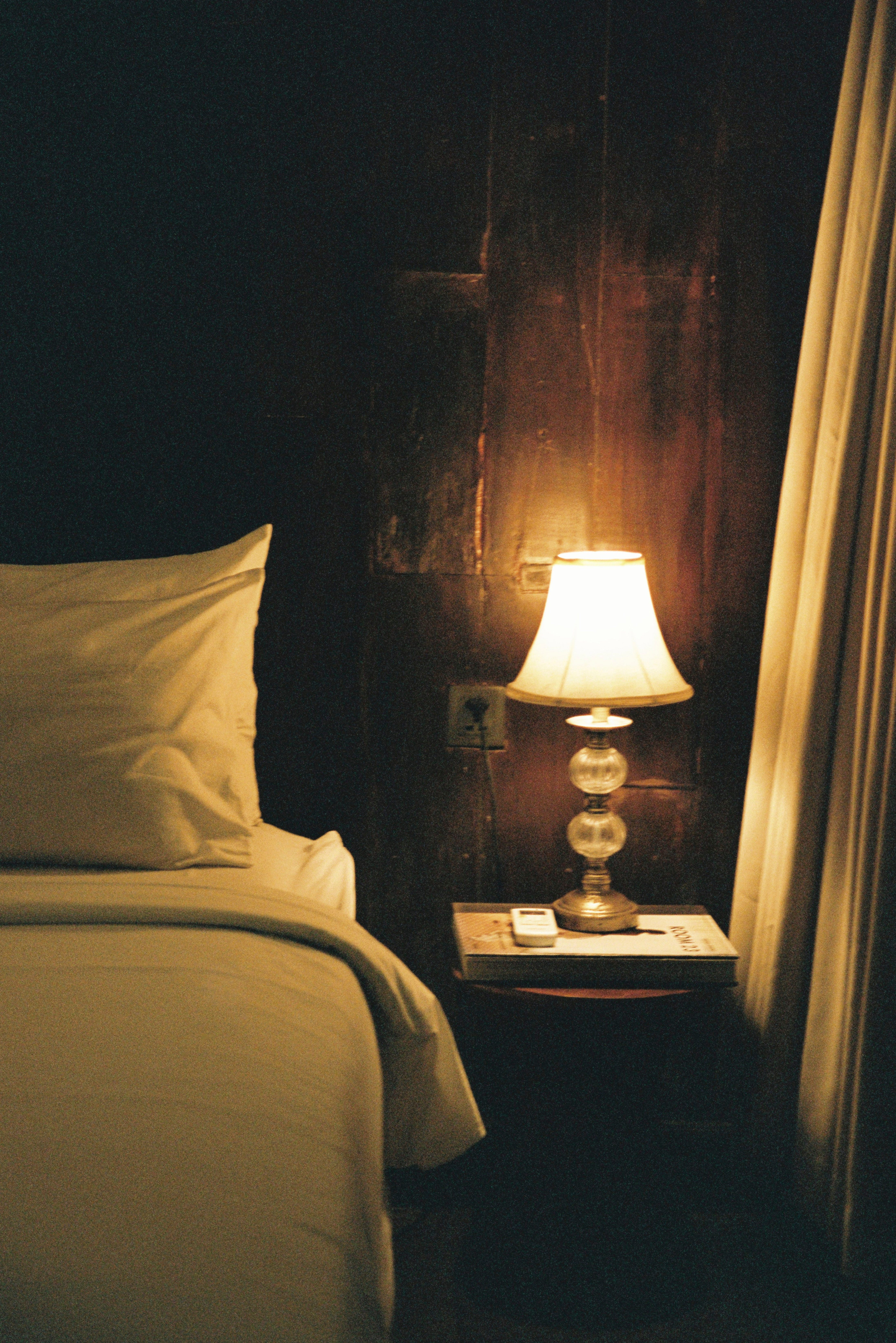
A warm dinner that doesn’t take a recipe. The lamps on by 6pm even though it isn’t dark yet. Something you’ve already seen on the television, so you don’t have to follow it closely. A bath if a bath is in you, not because it’s Sunday and you should. A walk that isn’t for the steps. Sitting in a different chair in the house, in a room you don’t usually sit in, for half an hour, with nothing in your hands.
The point is to take the evening down a register, not to optimise it or photogenic. Just to make it slightly quieter than it would otherwise be, by removing some of the doing without replacing it with more doing.

When Monday Arrives In Your Head
There’s going to be a part of the evening, around 8/9pm, when the Monday starts arriving in your head. The meeting, inbox, the thing you said you would do. The conversation you’ve been postponing. There’s no way to slow this part down by force. The dread doesn’t respond to being told to leave.
What sometimes helps is to acknowledge it briefly. Let it be in the room, ‘‘I know Monday is coming’’ and then return your attention to whatever soft thing you’d put around yourself for the evening. The film, the voice in your headphones. The warmth of a cup of tea. The dread will still be there, but it will just be less in charge.
And The Night Itself
Sunday night, for many people, is the worst night of the week to sleep. The body knows, the system braces. The thoughts about tomorrow arrive earlier and louder than usual.
If you can, this is the night to be especially gentle with yourself, not strict or perfect, just gentle. Whatever soft anchor usually helps you, use it. A voice in the room, a familiar episode of something you don’t have to think about - mine is a YouTube channel I rewatch because for whatever reason, his voice and videos, help me relax. Permission to be awake for a while if you need it to be.
Sunday night is allowed to be the hardest night. It often is. That doesn’t mean you’ve done it wrong.
A slow Sunday evening isn’t a routine you’re going to nail. It’s a register you sometimes manage to drop into, partially, for some of the hours, in between the bracing.
Some Sunday’s you’ll manage it and some Sunday’s the week ahead will be too loud. The evening will pass tightly and you’ll go to bed without ever really softening. That’s also a Sunday. They don’t all have to be the same.
You’re allowed to be tender with yourself on the day before the week begins.
Rest well