

10 Things To Remove From Your Evening Routine - A Sunday Night Letter
There’s a lot of advice about what to add to your evening routine. This isn’t that.
This is 10 things you might be doing in the evening that you don’t have to be doing. Some of them you’ve been told to do. Some of them you’ve taken on yourself, quietly, over the years, without ever deciding to. Either way, they are optional.
You don’t have to remove all of them. You probably won’t remove any of them on a strict schedule. The point isn’t a project, the point is to notice them, to know they are there, and on the night’s when the evening feels too crowded, to remember that some of the things crowding it are things you’ve been carrying that you could put down.
Number One: The Wind-Down Checklist Itself.
A wind-down can become it’s own performance. The journal, the stretch, the breathing, the page of a book you don’t actually want to read. If the routine is no longer doing what it was meant to do, you’re allowed to skip it. You’re allowed to go straight to bed. The body doesn’t always need a ceremony.
Number Two: The Sleep Tracker.
The morning verdict is rarely useful. A score telling you that last night was 67% restorative does not help you tonight. It sometimes makes tonight worse, because now, you’re going into the evening with a number to beat. If the tracker is making you anxious about your sleep more often than it’s making you reassured, it has then stopped being a tool. It has become a witness you didn’t ask for.
Number Three: The Clock Check Once You’re In Bed.
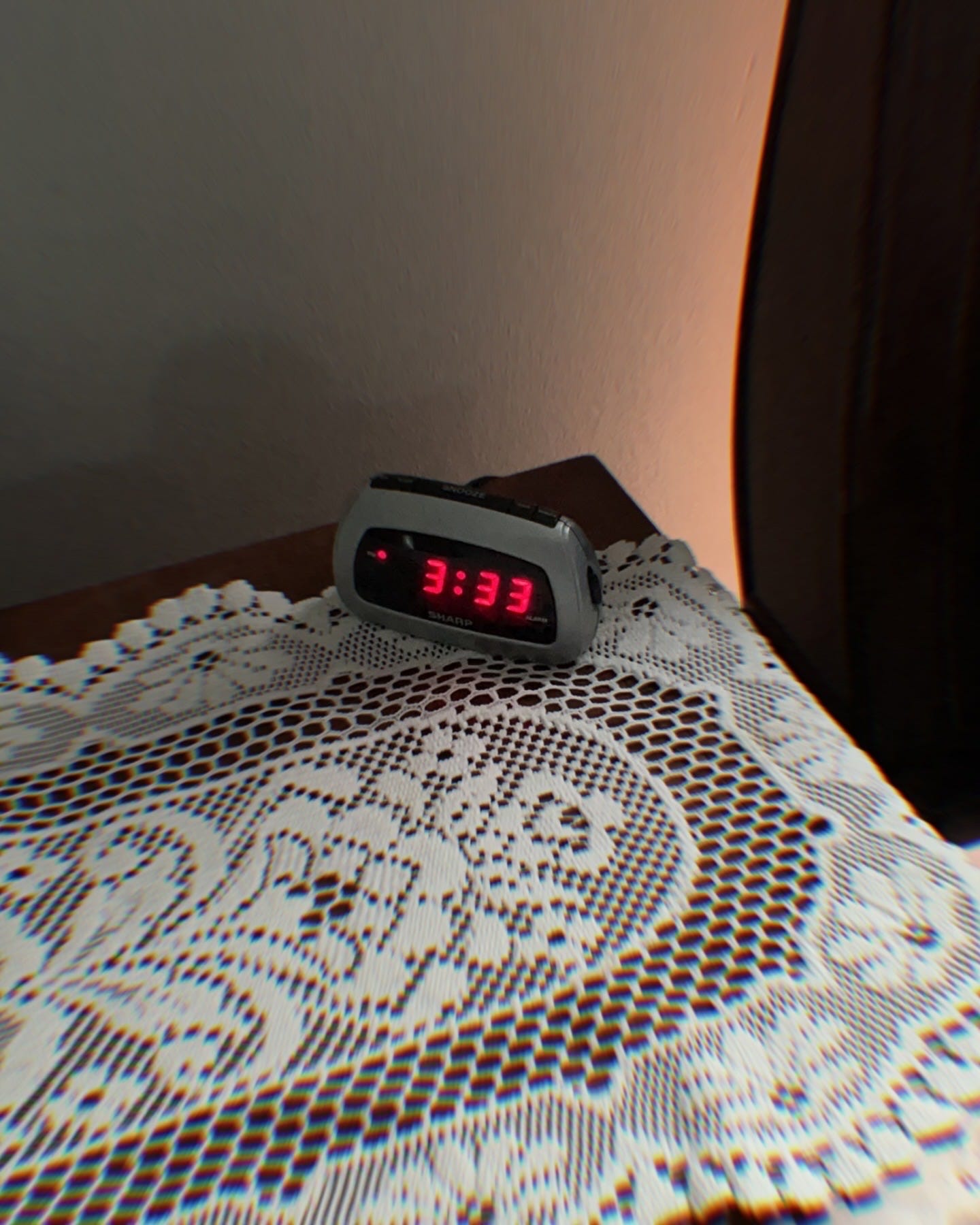
The little arithmetic in the dark. ‘‘If I fall asleep right now, I’ll get 6 hours.’’ ‘‘If I fall asleep right now, I’ll get 5 and a half.’’ Each time you check, the calculation starts again, and the calculation is a tiny act of pressure your nervous system can feel. The clock is rarely your friend in those hours. You’re allowed to turn it way from you. In fact, I insist that you do.
Number Four: The Strict Screen Cut Off. (Yes, this one)
If the rule is working, keep it. But if the rule is one you fail at, feel bad about it, and then keep re-commiting to every Sunday night, the rule itself might be the problem. Not all wakeful minds are calmed by an hour of darkness before sleep. Some of them are activated by it. You’re allowed to have a different relationship with the screen than the wellness accounts have given you permission to have. What I would say, it is likely a content stimulation rather than the screen itself.
Number Five: The End of Day Debrief.
The heavy conversation. The ‘‘Let’s talk about this’’ at 10pm. The replay of the day’s frustrations into your partner’s ear right as the lights go out. There are many good times to have these conversations, the hour before sleep is rarely one of them. The body cannot easily process new material at the same as its being asked to power down for the night.
Number Six: News and Feeds In The Last Hour.
This isn’t a screen rule, it’s a content rule. The scroll late at night isn’t doing what it pretends to be doing. It isn’t relaxing, it isn’t catching you up. It’s loading new material into a system that was about to star trying to clear the day. You don’t have to ban it, you can just notice what it tends to leave behind, and decide whether that’s what you want in the room at 11pm.
Number Seven: The Mental Audit Of What You Didn’t Do Today.
The list arrives often, the moment your head touches the pillow. The things you were meant to do or said you would. The half-done, or unanswered. None of it is going to be solved tonight. The audit at this hour, is not productivity, it’s just self criticism in the dark. You’re allowed to put it down until the morning, when there might actually be something you could do about it.
Number Eight: The Plan For Tomorrow’s Hardest Thing.
You know the one. The meeting, the phone call, the conversation you’re already half rehearsing in the dark. The plan you’re making right now will not survive the morning anyway. It’s almost always better made over coffee, with your eyes open, in the daylight, by a version of you that has slept than by the version of you that was trying to.
Number Nine: The Comparison To People Who Fall Asleep Easier.
There are people who fall asleep the moment their head hits the pillow. There are people who follow the rules, and the rules work. They exist, but their nervous system’s are not your nervous system and a comparison made at midnight has rarely helped anyone get any closer to rest. You don’t have to be one of them, you’re allowed to be the kind of sleeper you actually are.
Number Ten: The Promise You Made Yourself About Tonight.
The one you made earlier today. ‘‘Tonight I’ll be in bed by 10pm.’’ ‘‘Tonight I’ll fall asleep quickly.’’ ‘‘Tonight will be different.’’ It was a kind thing to say to yourself, but it was also a setup. Because now, if it doesn’t happen, you’ve failed at something. You’re allowed to release the promise. The night doesn’t owe you a particular outcome. You don’t owe the night a performace.

None of this is a routine to follow, it’s the opposite of a routine. It’s a small inventory of the things you may have been carrying into the evening without realising you’d picked them up.
You don’t have to remove any of them, you can just notice them sitting there, and on the nights when the room feels too crowded, you can quietly set one of two of them down.
You’re allowed to carry less than you’ve been carrying.
Rest well.